The Black family rejects Great Benefit’s $75,000 settlement offer
The RainmakerThe Black family rejects Great Benefit Life Insurance Company’s $75,000 settlement offer while Donny Ray Black is nearing the end of his life without the bone marrow transplant his family believes his policy should have covered. The choice pits an immediate sum of money against a chance to expose the insurer’s denials. For Rudy Baylor, it is also a test of whether he will put his clients’ interests ahead of a fee that would transform his own finances.
The Offer and Its Leverage
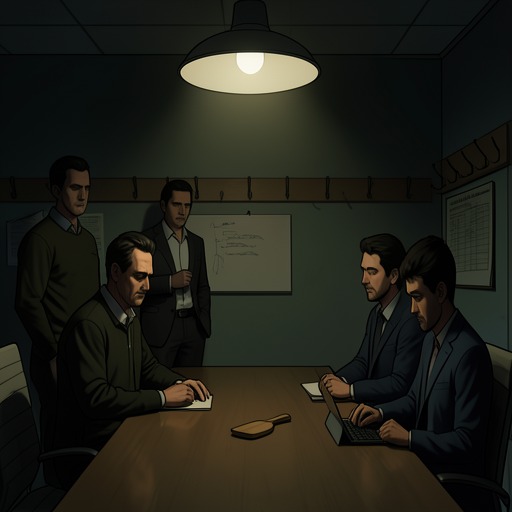
The proposal follows a preliminary hearing at which Judge Harvey Hale indicates that he is inclined to dismiss the case. Great Benefit Life Insurance Company’s lawyer, Leo F. Drummond, presents the offer as an economic calculation: he says defending the lawsuit through trial would cost the company between $50,000 and $75,000, and the insurer authorizes him to offer $75,000 to settle. The offer carries no admission of liability and is available for only 48 hours. Drummond describes the settlement as a way to avoid litigation costs, executive depositions, publicity, and the possibility of an unpredictable verdict.
The offer draws on a wider imbalance between insurers and low-income policyholders. Max Leuberg has explained that these inexpensive, door-to-door policies are collected in weekly payments and that companies often deny claims on shifting grounds. He estimates that only about one in thirty bad-faith denials reaches court, in part because people with limited means may fear lawyers and the legal system. He also cautions that juries can be reluctant to award large punitive damages against wealthy companies. The settlement therefore offers the Blacks money now, while asking them to abandon a case whose success is uncertain.
The Family Weighs the Money
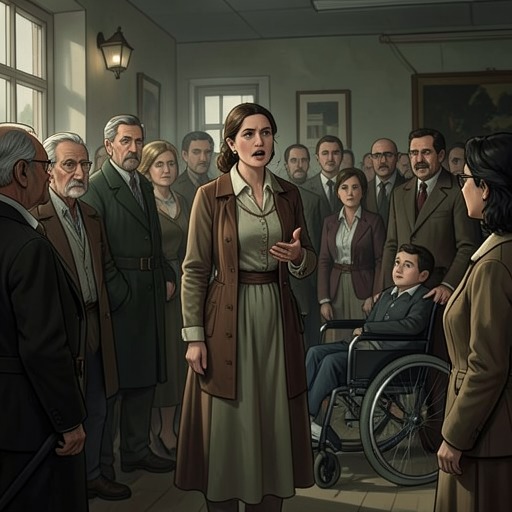
When Rudy tells Dot Black that Great Benefit Life Insurance Company has offered $75,000, she understands it as an attempt to buy off the family. The offer comes too late to secure the transplant Donny Ray needed the previous year. With Donny Ray fading fast, Dot rejects the idea that the money could compensate for what has already been lost. She makes clear that she wants the company held accountable, not simply paid off.
Rudy takes the question to Donny Ray, who asks whether the insurer might offer more and how much Rudy’s fee would be. Rudy explains that his contract entitles him to a third of any recovery. Donny Ray calculates that the remainder would leave $50,000 for his parents, enough in his view to pay off their house, replace their car, and set money aside for old age. Dot still does not want Great Benefit’s money. Donny Ray later asks Rudy directly whether he wants to settle, acknowledging that some of the funds would go to the lawyer. Rudy says he does not: he wants to expose the company.
The decision confronts Rudy with a personal temptation. A settlement would produce a $25,000 fee, an amount he can scarcely comprehend at this point in his career. He recognizes how easily he could persuade the family to accept by emphasizing Hale’s apparent readiness to dismiss the case and the risk that the offer would disappear. Instead, he holds to his duty to advise the clients in their best interests and leaves the choice with them. The refusal is the Blacks’ decision, not a lawyer’s unilateral rejection of money on their behalf.
Refusal and the Case’s Continuation
The next morning, Rudy confirms to Drummond that his clients will not accept the offer. Drummond warns that the case will now become a fight but does not increase the amount. The situation changes when Hale dies before signing an order dismissing the lawsuit. Rudy checks the court file and learns that the case remains alive, though the threat that it might be dismissed had shaped the settlement decision.
The family’s refusal carries forward into the trial. Dot testifies about her efforts to obtain care for her son and reads the insurer’s successive denial letters to the jury, including the insulting letter that becomes a focal point of the case. Later testimony describes Great Benefit’s 1991 policy of initially denying claims over $1,000 for a year, regardless of their legitimacy; Jackie Lemancyzk says the scheme generated roughly $40 million. At trial, Rudy also exposes Section U in the claims and underwriting manuals, which directed the two departments to pass files between them while withholding payment. Donny Ray’s recorded testimony, edited to 31 minutes, gives the jurors a direct account of the person behind the claim.
In closing, Rudy sets the company’s financial scale against the harm described in court. Using Great Benefit’s figures, he writes $475 million in available cash, reserves, and undistributed surpluses on the board, alongside an admitted net worth of $450 million. Drummond, by contrast, frames $200,000—the stated cost of the transplant—as a practical sum that could improve Dot and Buddy Black’s income. Rudy answers that the question is not merely what money could be useful to the family, but whether the company’s conduct warrants punishment. The earlier $75,000 offer thus marks the point at which the Blacks decline a private resolution and pursue a public judgment on the insurer’s practices.
Significance
The rejection is not a guarantee of victory or compensation; it is a choice made under pressure, with Donny Ray’s treatment already out of reach and the case’s legal future uncertain. Its force lies in the contrast between the insurer’s calculation of defense costs and the family’s account of an irreversible loss. For Rudy, refusing to exploit that uncertainty for a fee becomes part of the case itself: the clients’ consent governs settlement, and the claim proceeds because the family values exposure and accountability over the offered sum.